
How to Find Compton Residents
A useful Compton residents directory search begins with the fact you already know. An address belongs first in the Los Angeles County Assessor Portal, where an AIN, or Assessor Identification Number, ties a situs location to parcel facts. A name may fit better in the Los Angeles Superior Court party search, the state business and license indexes, or a library directory. An older household needs a year, a street variant, and a shelf search. Each source answers a narrower question than a general people list.
Official records can show ownership, a recorded transaction, a filed case, a registered status, a business connection, or an older address. They do not create a complete list of everyone present at a home. A deed names parties to a transaction. A parcel roll describes land. A voter form verifies the identity details entered by the voter. A directory may list adult occupants and phone information for one publication year. The safest result is a match across two independent records.
- Write down the known name, address, time period, and reason for the search.
- Use the Assessor Portal by address or AIN and save the legal description.
- Choose the county, court, city, or state custodian that fits the question.
- Compare names, dates, parcel details, and place clues instead of relying on a city match.
- Request the record or visit the library when the online index stops short.
That order keeps a Compton resident lookup tied to a real record trail. It also reduces false matches caused by common names, renamed streets, and postal lines that cross the incorporated city boundary.
Compton Resident Records Offices
Compton is an incorporated city in Los Angeles County, but Los Angeles is the county seat. The custody split matters. City Hall keeps permits, presale reports, code cases, licenses, agendas, and municipal requests. The county assessor supplies parcel and AIN facts. The Registrar-Recorder/County Clerk, or RR/CC, records deeds, liens, marriage documents, fictitious business names, and related filings. California offices hold vital, license, privacy, and statewide search systems.
The records offices below are the main handoffs in a Compton residents directory search. The RR/CC real-estate records instructions explain why deed discovery takes place at Norwalk rather than through an Internet name box. The county's role is broad, but each index still has a fixed purpose and access rule.
Los Angeles County RR/CC
Recorder Division
12400 Imperial Highway
Norwalk, California
Los Angeles County Assessor
Parcel and AIN search
Online address search
Counter and data-sale owner access
LA County Voter Services
Registration status lookup
Personal identity inputs required
Assistance: 800-815-2666, option 2
Note: Custody follows the record type, so a city address does not mean every related record is held at Compton City Hall.
Compton Records and Parcel Search
The property side of the Compton residents directory starts with the Assessor Portal. Its Basic Search accepts an AIN or situs address through an autocomplete field. Legal Search gives a route through the legal description, and Map Search lets a researcher pan, zoom, and select a visible parcel. Save the ten-digit AIN, situs address, legal description, use type, and any map context before moving to a different office.
The public parcel card can include property type or use code, year built, building or unit facts, assessed land and improvement values, tax-rate area, and sale history. Owner name and owner mailing address are not published in the public web result. Current owner information must come through an assessor district office or Property Data Sales. A parcel search therefore identifies land first, not a household.
The Assessor mapping help warns that corner, multiunit, commercial, new, and vacant parcels may not respond to the address form you expect. Try nearby cross streets when the exact text fails. The label VAC or VIC is a proximity notation for a vacant parcel, not a normal street address.
| Assessor control | What it accepts | Use in a directory search |
|---|---|---|
| Search by AIN or Address | AIN or situs text | Anchor a street location |
| Basic Search | Standard address or AIN mode | Open parcel facts |
| Legal Search | Legal-description route | Bridge old and new wording |
| Map Search | Pan, zoom, parcel selection | Walk nearby parcels |
| Assessor Internet | Parcel-detail presentation | Check the public card |
The map view is the bridge from a single address to a street or block. It becomes more reliable when the AIN and legal description are kept beside the modern street text.
The official parcel search was captured for Compton research because the address and AIN controls are the first practical local anchor.
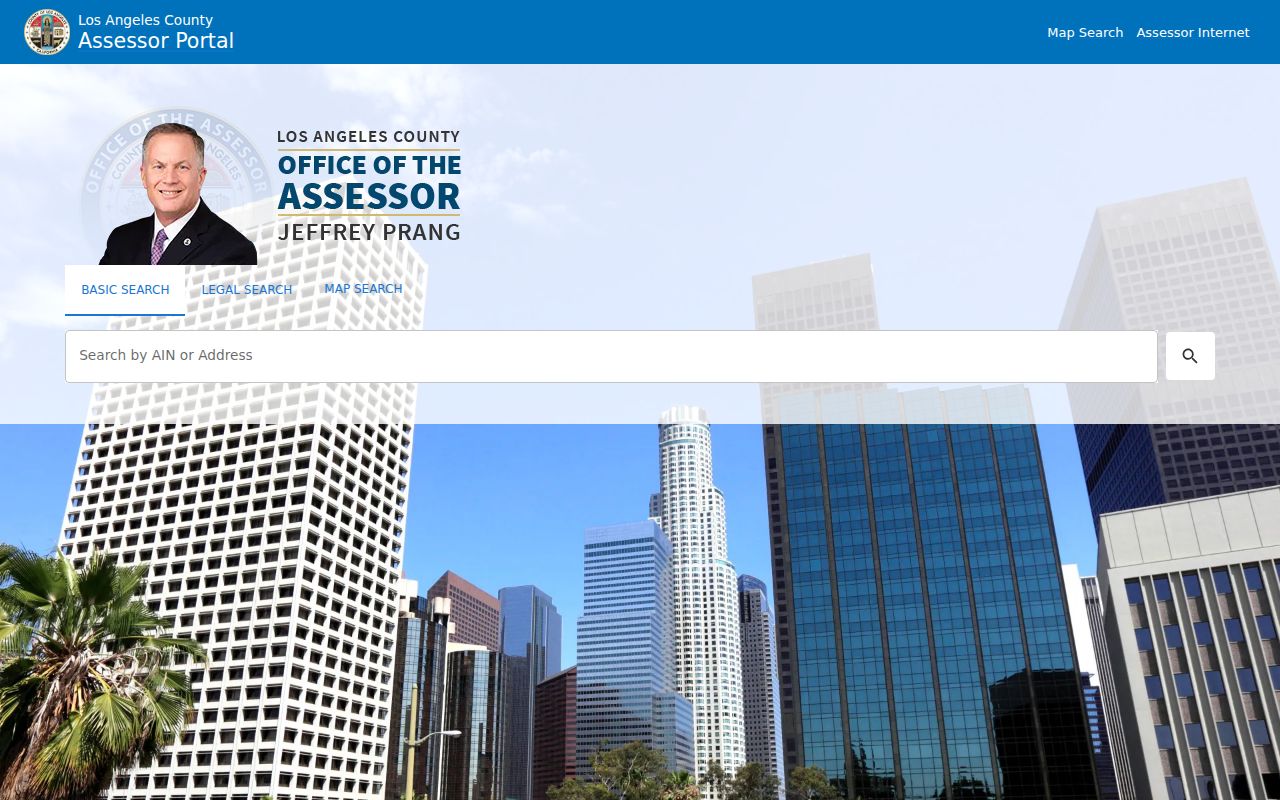
The public assessor view supports parcel discovery, while owner identity remains subject to the county's off-web access rules.
Compton Deeds Without an Online Index
Los Angeles County deeds are public for inspection, but the RR/CC does not publish its real-property name index on the Internet. The alphabetical index is arranged by grantor, the person transferring an interest, and grantee, the person receiving it, with the recording year. The county's privacy analysis found that protected home addresses could not be separated reliably from the larger index. This is the central fact behind many Compton resident records searches.
At Norwalk, records dated 1851-1957 are reviewed on the lower level and 1958-present on the second floor, by appointment. A current owner name from an authorized county channel can lead to a grantee entry. The deed supplies a grantor and legal description. The prior seller can then be searched as an earlier grantee. A mail request works after a document is identified, but it is not a substitute for an unknown-name search.
The RR/CC recorder FAQ confirms the name-and-year method and the lack of an address or Internet index. A record image may show the instrument number, recording date, parties, legal description, signatures, tax statement address, and notary block. Protected data may be redacted.
The deed trail belongs in a Compton residents directory only as ownership and transaction evidence. It does not prove who slept at an address, who shared a household, or who stayed there for a short time.
Note: An address alone cannot be submitted for a recorder index search because the county files real-property records by party name and recording year.
The Los Angeles County Recorder services page shows the county route for Compton deed research.
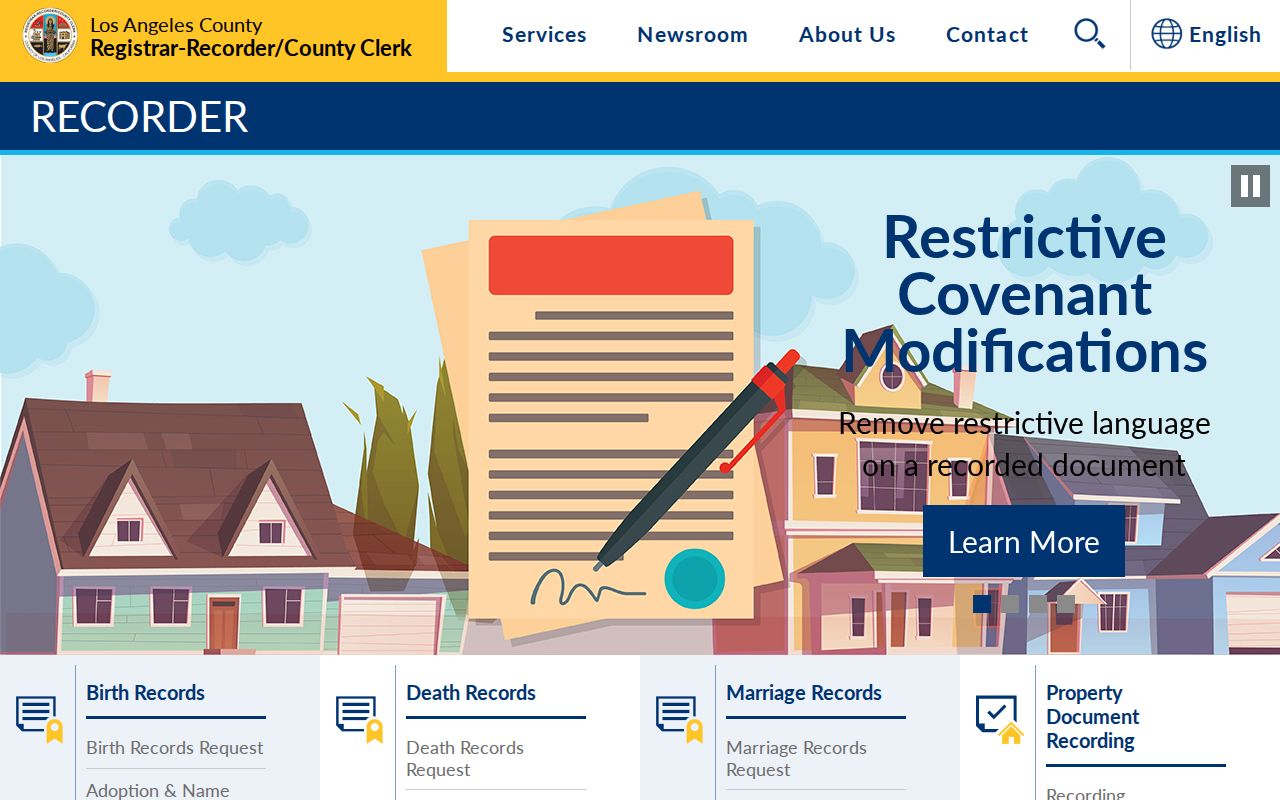
The official county page makes the offline discovery step visible before a researcher spends money on a copy request.
Current Compton Resident Directories
Current directory-like sources answer different questions. The assessor connects a location to parcel facts. The voter status form checks an entered voter identity and address. A deed or lien ties a party to a recorded instrument. A court case creates a party and date trail. City files can identify an applicant, contractor, official, or business contact. None of these sources is a complete Compton residents directory.
| Source | What it can show | Keeper | Access |
|---|---|---|---|
| Parcel roll and map | AIN, situs, legal and property facts | LA County Assessor | Free address/AIN web search |
| Voter status | Entered voter's registration match | LA County RR/CC | Identity-gated form |
| Recorded deed index | Parties, instrument, date, parcel link | RR/CC Recorder | Norwalk appointment |
| Court party index | Case type, filing date, case number | LA Superior Court | Portal and courthouse |
| City permit or license | Address, project, business contact | Compton departments | Portal, counter, or CPRA |
Use the source that fits the claim. A property result is strongest for a parcel. A court result is strongest for a case. A city permit is useful for a project timeline. A library directory is stronger for a past occupant. A business filing is an affiliation clue, not a home address proof.
Compton Resident Voter Verification
The LA County voter status lookup is designed for a person checking their own registration, not for browsing a Compton street. It asks for last name, birthdate, residence house number, and ZIP Code. The search can confirm a submitted identity and registration status, but it does not disclose ballot choices and does not create a public neighbor list.
California voter-file rules matter. Elections Code sections 2188 and 2194 and California Code of Regulations title 2, sections 19001-19013, restrict access and use. The file may contain registration county or ID, residence and mailing fields, party, precinct, status date, update reason, vote-by-mail status, and election participation details. Driver or state ID, Social Security number, unique identifier, and signature are withheld. A voter-file request requires a qualifying purpose, security terms, and a noncommercial, non-harassment certification.
The LA County voter status form is the right route for personal verification. It is not a public Compton residents directory, and an election address is evidence of a submitted registration record rather than proof of present physical occupancy.
Note: Safe at Home voters and other protected registrants may have substitute or suppressed addresses, so an empty result does not establish that a person is absent.
Compton Court and License Clues
A one-person search often becomes clearer when a parcel name is checked against a case, license, or business filing. LA Superior Court separates case-number access, case calendars, document images, civil and probate party searches, and criminal defendant searches. Party-name results may show a litigant name, case type, filing date, location, and number of imaged documents. A case summary can add roles, docket events, hearings, charges, or disposition where available, but the portal warns that it is not the official record.
The Compton Courthouse serves Compton, Carson, Lynwood, Paramount, and nearby areas. Family, probate, unlimited civil, limited civil, small-claims, and criminal indexes have different coverage starts. Sealed, confidential, minor, paternity, adoption, juvenile, and some criminal materials are not open in the same way. Courthouse computers and archive staff remain useful when a remote screen is narrower.
Professional and business sources add a different kind of identity anchor. The state Department of Consumer Affairs license search can show license number, type, status, issue or expiration dates, and public discipline. The California Secretary of State bizfile search can show entity number, status, formation date, agent for service, reported officers or managers, and filings. These are affiliations, not residence proof.
The LA Superior Court case-access portal supplies the court view for Compton name research.
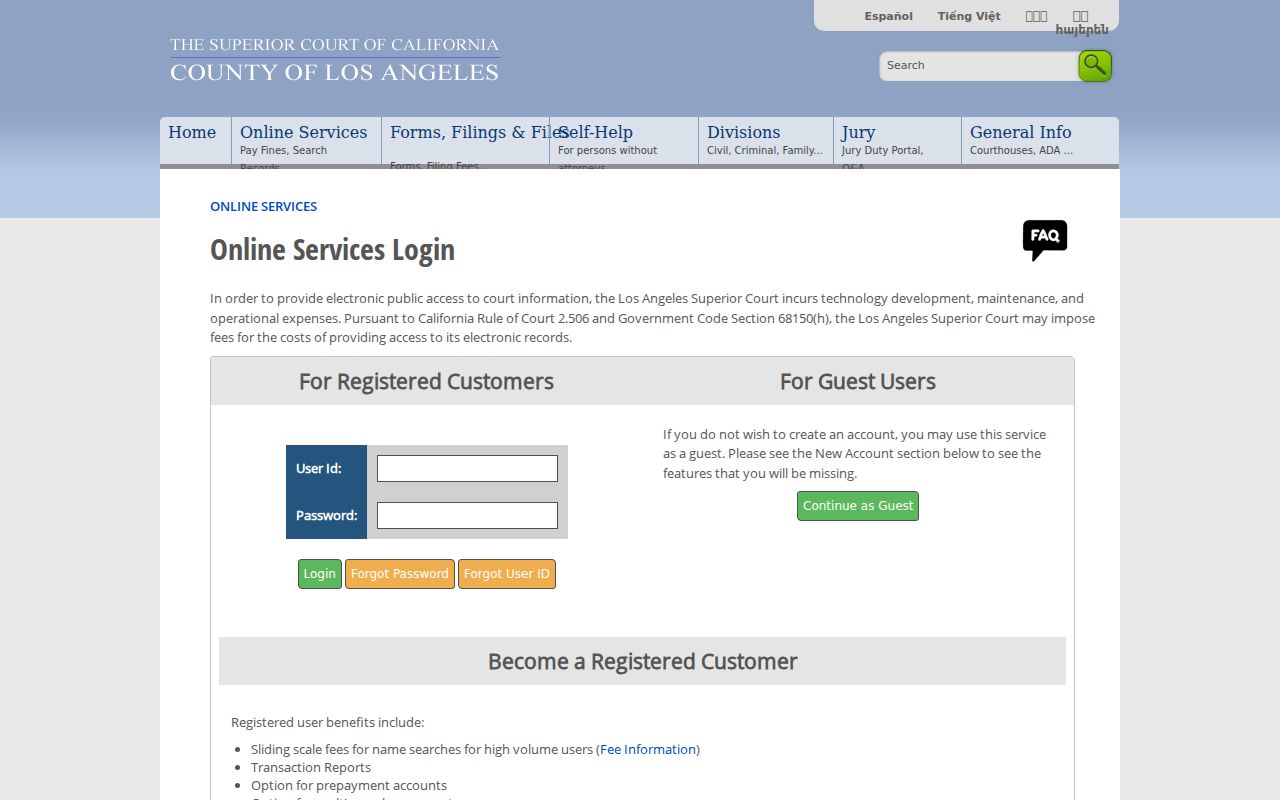
Its controls show why a name, a case type, and a date need to be kept together when checking a possible match.
Compton Permits Explain Addresses
City records can explain why an address appears, changes, or disappears. Building and Safety issues permits for construction, alteration, repair, and improvement, reviews plans, inspects work, issues certificates of occupancy, and handles unsafe-property abatement. The Citizenserve gateway exposes service categories such as permits, licenses, applications, inspections, and complaints, although a stable public historical search was not captured.
Compton's residential presale inspection is a particularly local record. Municipal Code section 14-2.3 calls for a report of city-record matters concerning authorized use, occupancy, zoning classification, and code violations before a sale or exchange. A published city FAQ says the records can be reviewed by appointment or public-record request. The research notes cited minimum inspection fees of $129 for a single-family dwelling and $105 per multifamily unit, so a requester should confirm the current schedule.
Names on a permit identify an owner, applicant, contractor, or designer connected with work at a place and time. They do not establish residence. For a complete history when the public portal cannot retrieve older material, use the Compton public-record request portal with the exact address, AIN, department, date range, project number, and desired format.
The Compton records-request page was captured for the local request path shown here.
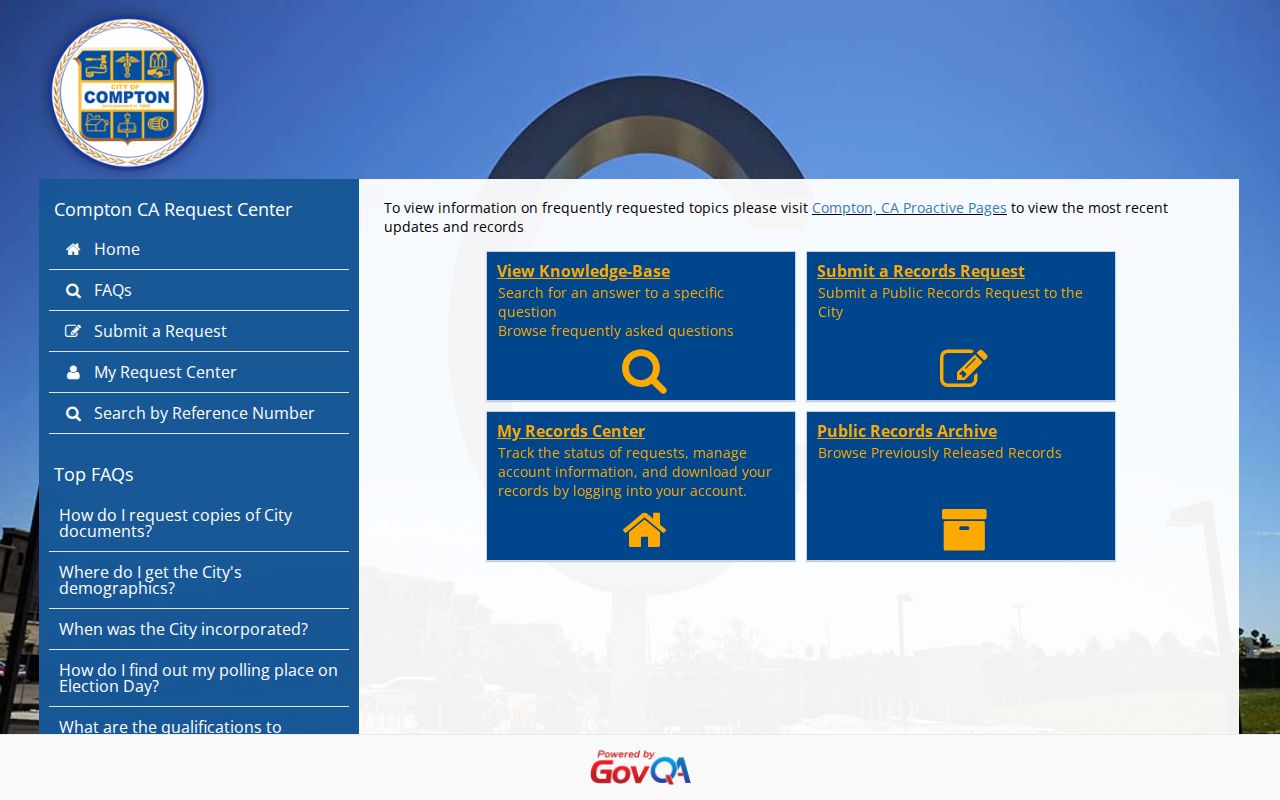
The request portal is the fallback when a city-held address record is not exposed through a stable public search screen.
When Compton Records Go Offline
California's Public Records Act, now codified at Government Code section 7920.000 and following, is the general fallback for nonexempt city and county administrative records. A public agency generally has ten calendar days to decide whether it has disclosable responsive records and may give written notice of an unusual-circumstance extension of up to fourteen additional days. That is a determination deadline, not a promise that copies will arrive by then.
A good request names the department, record type, date range, address or project number, and desired format. The City Clerk can route a request, and the Compton WebQA/MyCustHelp portal offers search, request submission, tracking, and account functions. Inspection is ordinarily free; copies may carry a duplication charge. CPRA does not replace the special process for deeds, vital certificates, voter data, or court files.
The California Attorney General's Public Records Act guide explains the statewide request framework used for Compton records.
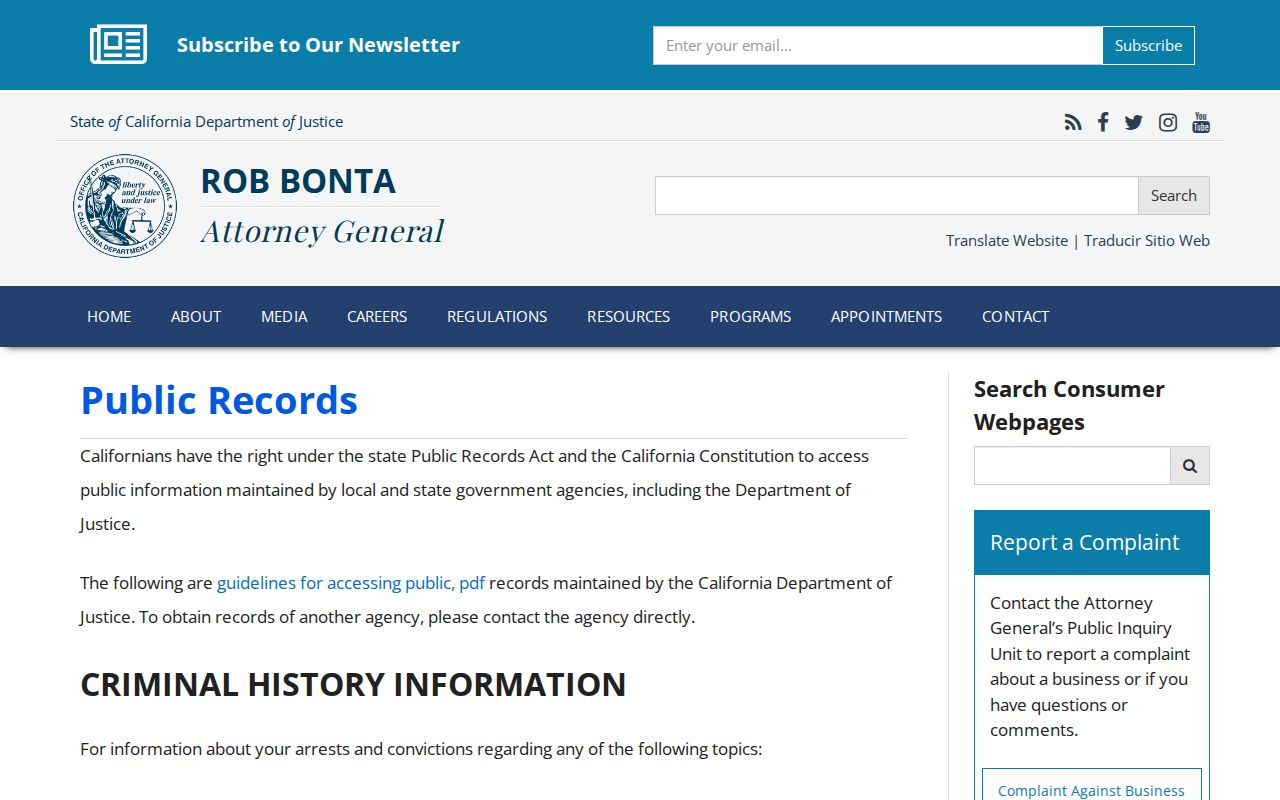
The guide is useful when a city permit, code log, agenda, or administrative record needs a focused request rather than a broad name search.
Compton Resident Search Boundaries
A Compton residents directory cannot prove every occupant, private utility customer, delivery recipient, or short-term visitor. The assessor's situs address identifies the taxable place, while the mailing address tells where tax notices go. A deed names legal parties. An FBN filing identifies a business and may use a service address. A court index lists a case relationship. Those facts should not be blended into a claim that someone currently lives at a location.
California's Safe at Home program supplies a substitute mailing address, forwarding, a service-of-process agent, and confidential voter registration for qualifying threatened or protected people. Government Code sections 6205-6216 govern the program. The Attorney General's consumer privacy guidance also explains access, correction, deletion, and sale or share opt-out rights for covered data, while a source deed or court record remains with its custodian.
Lawful use. Compton records are useful for family history, civic research, reconnecting, and personal safety awareness. Do not use an address or name trail to stalk, harass, intimidate, or harm anyone.
When a record is wrong, contact the office that created it. A directory cannot alter the assessor roll, voter file, court index, deed, or city log.
Compton Postal Geography Matters
The Compton residents directory needs a jurisdiction check because postal labels and city limits do not match in every corner. Compton is served primarily by ZIP Codes 90220, 90221, and 90222. A Compton postal line in 90222 can sit in Willowbrook or another unincorporated pocket outside incorporated Compton. A postal city line therefore cannot decide whether City Hall, Los Angeles County, or a neighboring city holds a permit.
The USPS facility listing identifies the Hub City, Compton, and Willowbrook facilities. Hub City in 90220 was dedicated as the PFC James Anderson Jr. Post Office in 2024. The city also lists 90223 and 90224 in planning material, but the research did not verify them as ordinary street-delivery zones. Verify any specific address with USPS, then confirm the parcel and council geography before requesting a city record.
ZIP is delivery geography. AIN and legal description are parcel geography. City jurisdiction is a government boundary. Keeping those three labels separate prevents a postal match from becoming an unsupported resident claim.
Historical Compton Resident Directories
Historical Compton residents appear in scattered city directory runs rather than one continuous shelf. LAPL's City Directories Index lists Compton and Watts holdings from 1913-16, 1921-23, 1925, 1927-28, 1931, 1940, 1946-47, 1949, and 1951, with further roll and paper issues through 1962. Early runs may be shelved under Watts or Los Angeles City and County. Digitized Los Angeles and Watts volumes add 1881-82 through 1887-88, 1914-15, 1919, 1921, and 1925.
Entries may include a surname, given name or initial, spouse, occupation, work affiliation, residence mark, street number, phone, widow notation, and a cross-reference. Reverse or criss-cross editions can work from an address toward an adult occupant. Pair a directory year with a public census year and newspaper notice, then check whether a Wilmington Avenue reference is the older name for Willowbrook Avenue.
The full collection trail belongs in the Compton city directory collections page, where catalog gaps, library shelves, and the local history workflow receive the detailed treatment.
The LAPL City Directories Index is the most useful first catalog stop for the historical side of the Compton residents directory.
Note: A missing Compton volume does not prove a move; scattered holdings and alternate Watts catalog labels can create the gap.
Compton History in the Index Books
Record history gives the Compton residents directory an important local shape. The county's real-property books begin in 1850 or 1851, marriage indexes reach 1852, and Compton incorporated on May 11, 1888. RR/CC restoration work described more than 1,500 original handwritten index books in fair-to-poor condition. The long date reach is real, but the medium is physical, alphabetical, and tied to a name and year.
Compton Library opened in July 1913 and moved from a Main and Tamarind storefront to Compton Union High School, then a 1925 building on Almond Street, and finally its current Compton Boulevard location in 1974. Those moves help date newspaper notices, photographs, and older address clues. The CSUDH South Bay Digital Collection adds photographs, letters, businesses, settlers, flood and earthquake damage, and rebuilding context.
The CSUDH South Bay collection and the Compton Library research page make the local history shelf more useful when a formal roll stops at an old address.
In 2020, Compton counted 95,740 residents across 10.03 land square miles. That density makes a common name and a city label weak evidence by themselves. AIN, date, street variant, case number, or newspaper context supplies the needed second anchor.