
Sources for Previous Compton Residents
One address can have several trails. The deed index shows title parties and recorded transactions. The assessor anchors the current parcel. Directories and census schedules add household or adult-occupant clues. Permits date construction and name project participants. Newspapers and obituaries connect family and community events. Sanborn maps may show the structure, but the exact Compton sheet run remains unverified. The table keeps those roles distinct.
| Source | Years it covers | Where held | What it shows |
|---|---|---|---|
| RR/CC real-property index | 1851-present, office only | Norwalk RR/CC | Title parties and transactions |
| Assessor current portal | Current effective roll; history varies | Online, counter, data sales | AIN, situs, legal and property facts |
| Compton permits and presale reports | Exact online start not stated | Building and Safety, Citizenserve, CPRA | Work, dates, applicants, city matters |
| City and reverse directories | Scattered 1884-85 through 1962 | LAPL, Compton Library, digitized holdings | Adult names, addresses, occupations |
| Federal census | 1870-1950 public in 2026 | NARA, FamilySearch, libraries | Household enumeration |
| Sanborn maps | Exact Compton run unverified | Library of Congress and catalogs | Footprint, use, materials, street number |
The record trail is strongest when an AIN or legal description stays constant while names and address text change.
Compton Address Records Through Time
Start at the Los Angeles County Assessor Portal. Search the exact situs address, choose the correct suggestion, and save the ten-digit AIN, legal description, use type, and map location. The situs is the physical taxable place. The mailing address is where tax notices go. They can differ, especially when a parcel has an off-site owner or several units.
Owner name is deliberately absent from the public web result. Obtain the current roll entry through an assessor office or Property Data Sales before going to the recorder's name index. Do not assume that a matching mailing address proves occupancy. The AIN and legal description are the safer bridge into older records.
The Assessor mapping help warns that corner, multiunit, commercial, new, and vacant parcels may not match normal address text. Use cross streets, map selection, and VAC or VIC proximity notation when needed.
The RR/CC real-estate records instructions show the recorder step in the previous residents trail.
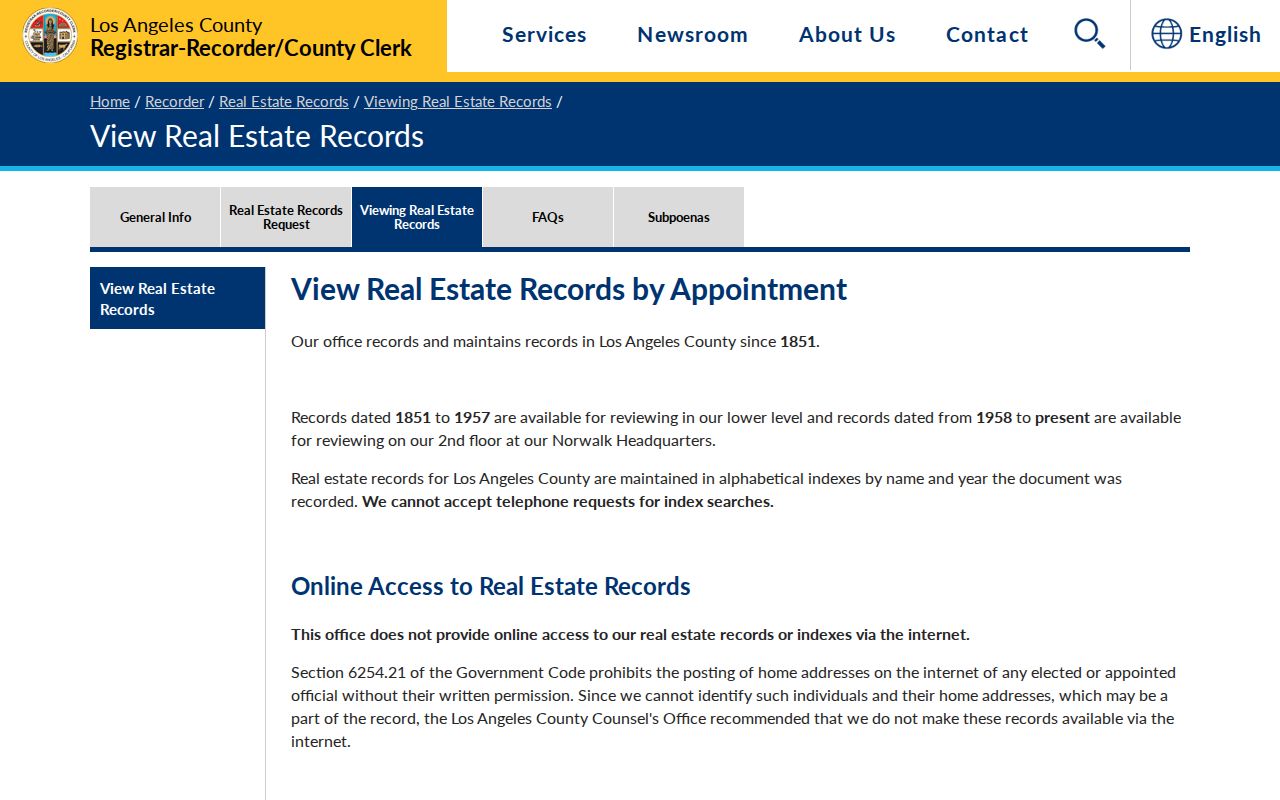
The parcel-to-record handoff begins with a location key, not with an unsupported name guess.
Note: The current parcel is the anchor for a previous residents search, but the public assessor result does not disclose the owner name.
Compton Records Through Earlier Grantors
Grantor means the party transferring an interest. Grantee means the party receiving it. A chain of title is the linked sequence of instruments that shows how an interest moved through time. A legal description identifies the land even when a street label changes. Those terms turn a deed search into a repeatable backward trail.
- Confirm the AIN and legal description at the assessor map, then obtain the current owner through an authorized county channel.
- At Norwalk, search the current owner as grantee in likely acquisition years and record the instrument number and date.
- Read the deed's grantor and legal description, then search that seller as an earlier grantee.
- Repeat only while the tract and lot remain the same; flag same-name parties and multiple parcels.
- Pair title results with directories, census, newspapers, permits, or obituaries before describing an occupant.
- Request a copy after the document is identified, using the county's mail or counter process.
The RR/CC real-estate access page confirms that 1851-1957 indexes are reviewed downstairs and 1958-present indexes upstairs at Norwalk. The index is alphabetical by name and year, not searchable by street.
Compton Recorder Records at Norwalk
Norwalk research is where the previous residents workflow becomes physical. Photograph or transcribe every index line, neighboring cross-reference, year, party role, and instrument number during the appointment. A later copy order cannot recreate an unknown-name search. Search the likely year first, then widen the range only when the legal description supports the same parcel.
When a document is identified, the recorder's mail process asks for document title or type, every known name, and a recording year or year range. Send payment by check or money order to RR/CC Real Estate Records, P.O. Box 1130, Norwalk, California 90651-1130. The research states processing within 20 working days. A search costs $0.50 per name per year with a $1 minimum. Plain copies are $5 for the first page and $3 for each additional page; certified copies are $6 for the first page and $3 for each additional page. Expedited mail or UPS is $18.50, and credit-card handling is $1.75.
Copies must be purchased as complete documents, not selected pages. The RR/CC mail request instructions and recorder fee page should be checked before payment.
The mail request view separates discovery from copying in a previous residents search.
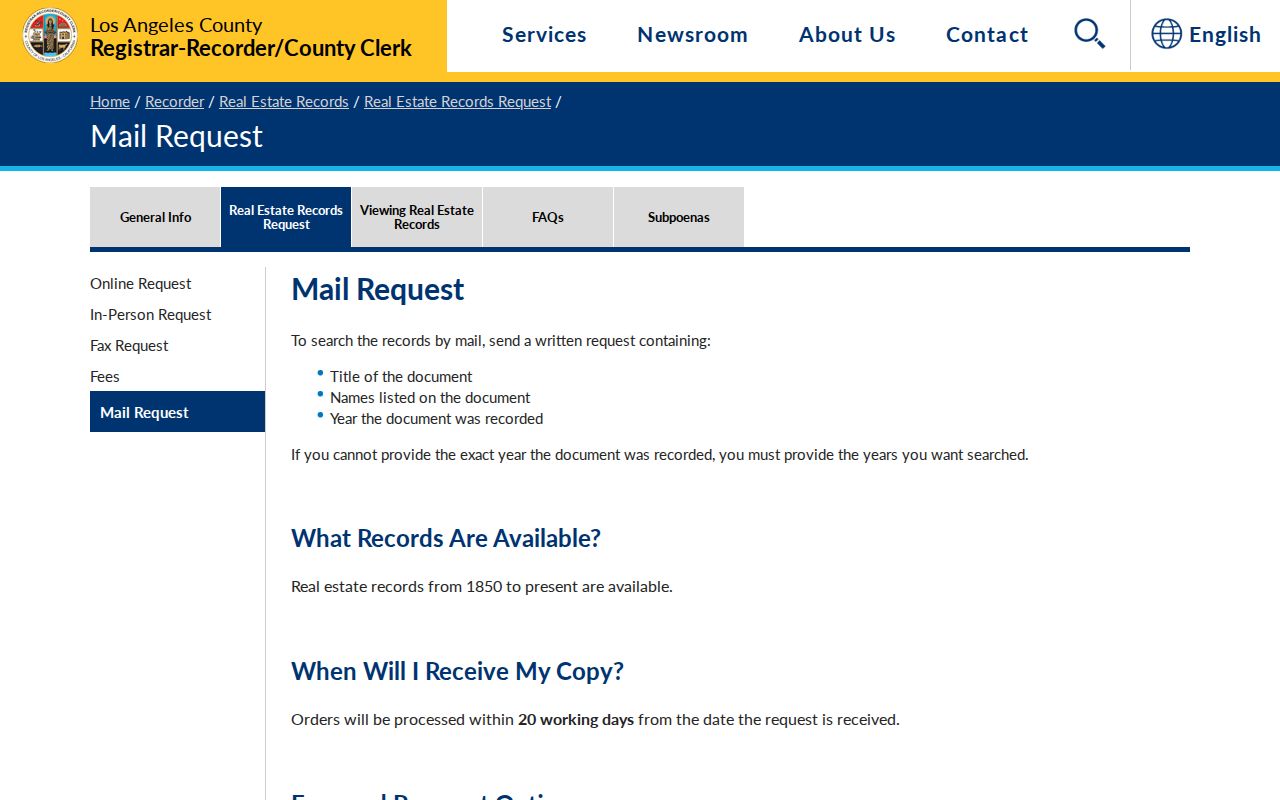
The mail form is useful after the party, year, and document type are known.
Note: Recorder discovery and copy ordering are separate steps; a mailed request cannot replace the Norwalk name-and-year search.
Compton's 1957 Index Floor Break
The county's date split is a practical research detail. Records dated 1851-1957 are reviewed on the lower level at Norwalk, while 1958-present are reviewed on the second floor. The split does not mean the property record stops in 1957. It tells a researcher where to look and how to plan a visit.
The county's long physical index history also explains why a web copy order cannot discover an unknown deed. RR/CC restoration work described more than 1,500 handwritten index books in fair-to-poor condition. The books preserve long coverage, but access depends on a name, year, appointment, and careful transcription.
A 2025 RR/CC fire-response FAQ described operational differences in copy delivery, including faster handling for some newer real-property records and mailing for older records. That information describes service tiers, not a new coverage boundary. The RR/CC availability FAQ is useful when timing matters.
The recorder fee information should be treated as current only after the office confirms it.
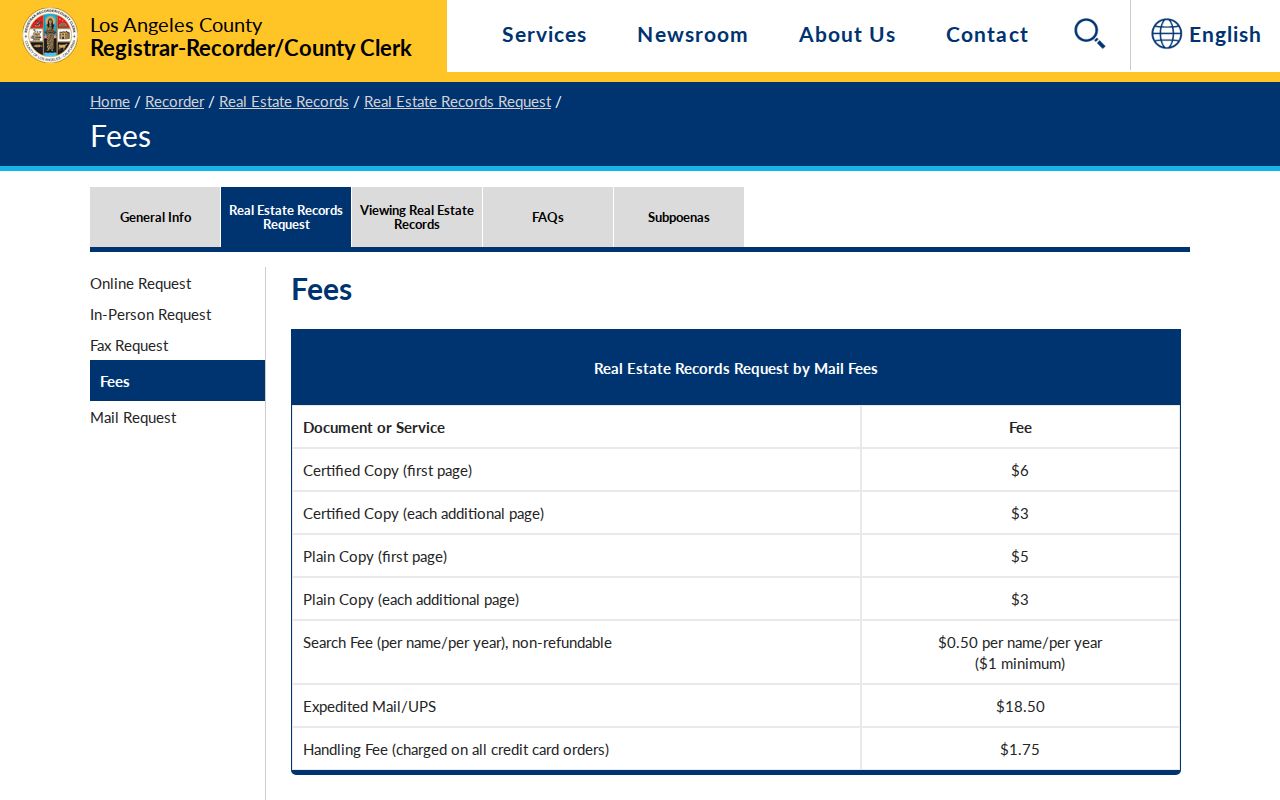
Fees matter after discovery, but they should not replace the in-person index work that finds an unknown party or instrument.
Compton Ownership Records and Occupancy
A deed says who held title or transferred an interest. It does not say who lived at the address. A tax bill is evidence about a parcel and account. A permit identifies people tied to work. A directory may show an adult occupant in a printed year. A census enumerates a household on a census date. Each source needs its own verb.
- Grantor
- The party named as transferring an interest in a recorded instrument.
- Grantee
- The party named as receiving an interest in that instrument.
- Chain of title
- A linked sequence of title instruments for the same land.
- Legal description
- Tract, lot, block, or other recorded land description used to identify the parcel.
For previous residents, the key question is often who was present in a dated period. Pair the deed chain with a directory, newspaper, census, or obituary. An heir listed in probate is a lawful endpoint for a family trail, but it is not proof that the heir occupied the property.
Past Compton Households in Directories
Compton's city directory holdings are scattered from 1884-85 through 1962. LAPL lists Compton and Watts runs, paper issues, roll numbers, and digitized regional titles. Early entries may be cataloged under Watts or Los Angeles City and County. The historical collection is covered in depth on the Compton city directory page; the previous residents workflow uses the relevant year as an occupancy check.
Start near the deed date, then compare the closest directory years. Check alphabetical and reverse sections, read the abbreviation key, and record street number, name, spouse, occupation, phone, and cross-reference. Pair the directory with the 1950 census or another public federal census, a local newspaper, or an obituary. A gap may mean a missing issue, an address change, a Watts label, or an ordinary move.
The LAPL City Directories Index supplies the year and shelf strategy for the historical portion of the previous residents search.
Note: A directory or census entry places a household in a dated source, but it does not prove title or present occupancy.
Compton Permit Records for House History
Compton Building and Safety records can explain when a structure or major change entered the paper trail. The department issues permits for new construction, alteration, repair, and improvement, reviews plans, inspects work, issues certificates of occupancy, and handles unsafe-property abatement. Citizenserve is the online gateway, but the research did not verify a stable historical search or exact online start year.
The residential presale report required by Municipal Code section 14-2.3 covers authorized use, occupancy, zoning classification, and recorded code matters before a sale or exchange. The city says a report can be reviewed by appointment or public-record request. A cited minimum fee was $129 for a single-family dwelling and $105 per multifamily unit, subject to confirmation of the current schedule.
Request an exact address and AIN when the portal cannot return older records. The permit trail can show that a house was altered, rebuilt, or assigned a project participant. It cannot by itself identify every previous resident.
Compton Probate Records and Obituaries
When a prior owner has died, probate and obituary sources can supply a family endpoint. Superior Court probate access needs the full decedent name and death date; Probate can provide a case number before a deeper file search. An obituary may name relatives, a funeral place, or a last known community. Neither source should be rewritten as proof that every heir lived at the property.
Use a date and a name variant. Search the Compton Library newspapers, the A C Bilbrew Black Resource Center's Compton Bulletin and Black press holdings, and local history material. Match a family clue to a deed, directory, or census entry. If the trail ends, label it as an endpoint rather than inventing a next address.
The Black Resource Center and Compton Library provide local newspaper channels for this part of the previous residents search.
Note: Probate and obituary clues can connect relatives to a record trail without showing who occupied the Compton address.
Compton Address Records and Sanborn Maps
Address continuity can fail on street names. Wilmington Avenue became Willowbrook Avenue, so an older directory or deed using Wilmington should be compared with intersections, tract and lot, and the modern AIN. A postal place label can also shift without changing the land. Preserve the original form beside the normalized form.
Sanborn maps can add structure evidence: footprint, materials, use, street numbers, and nearby features. Exact standalone Compton editions were not verified in the official catalog, so the maps belong in the “check if held” column, not in a claimed continuous run. The Library of Congress Sanborn collection explains the map type.
The map, deed, directory, and permit may each describe the same house in a different vocabulary. A stable lot or AIN is the best bridge.
Compton Deeds and Covenant History
Recorded deed history may contain restrictive covenant language from earlier social eras. Compton history records racially restrictive covenants in 1921, while current law makes such language void. RR/CC's restrictive-covenant modification initiative reviews county recorded documents from 1850 forward and can re-record a modified copy at no recording charge. This is a historical context clue, not a reason to reproduce offensive text.
The project shows why a title search can preserve both legal transfer and the social history around a parcel. Read the legal description, record the instrument, and describe the historical fact without treating an unlawful restriction as an active rule.
The RR/CC covenant-modification page supplies the official history route for this interest layer.
The page image linked below represents the recorded-document context, while the current legal status belongs to the public agency's explanation.
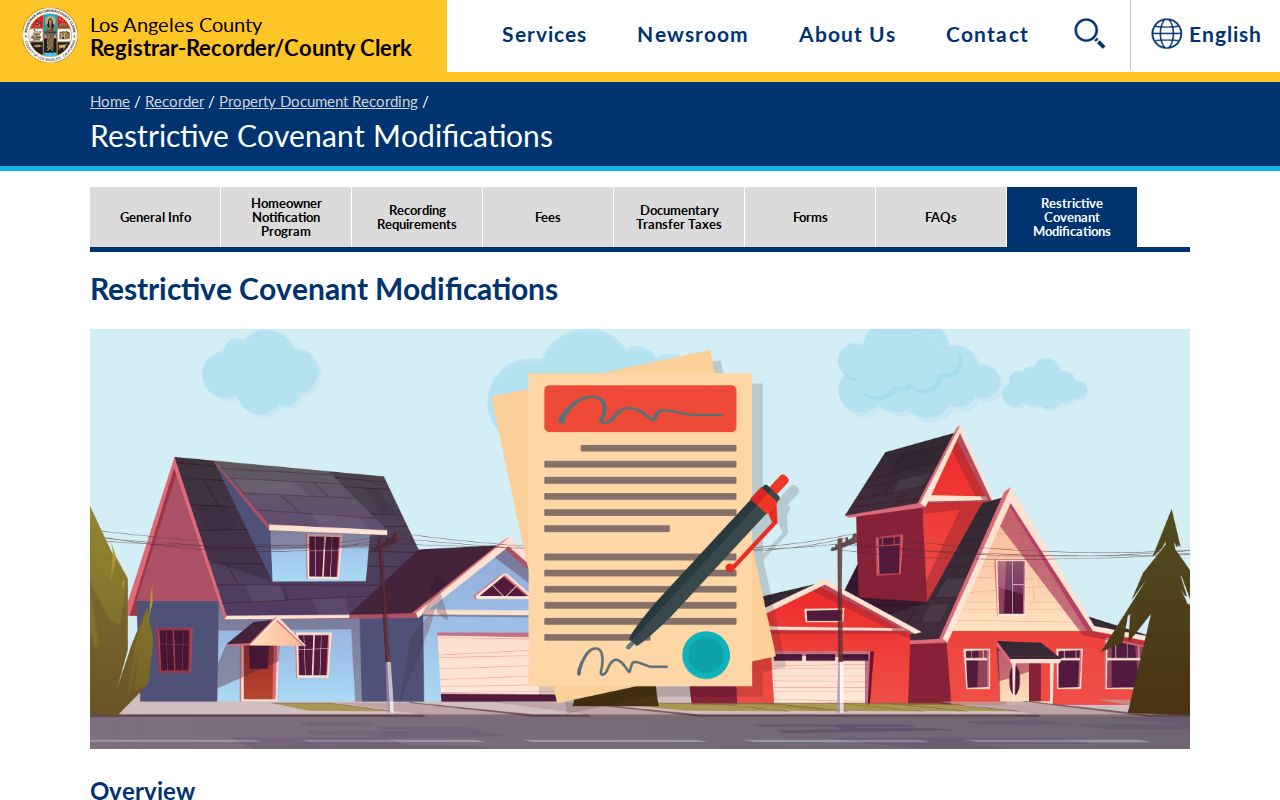
Historical title material needs careful reading, neutral description, and a clear distinction between past language and present law.
Lawful Compton House History
Previous residents research serves house history, family history, genealogy, and personal curiosity. It should not become a live watch list. Deeds, directories, census, and obituaries each expose only a slice of the past, and living people may be protected by Safe at Home, sealed records, or other confidentiality rules.
Lawful use. Use address history to understand a place and reconnect through appropriate channels. Do not use a previous residents search to stalk, harass, intimidate, or harm anyone.
A current question belongs in the Compton street directory for parcel and address work. The backward trail remains honest when each name is labeled as title party, adult directory entry, census household, permit participant, or obituary relative.
Note: A missing year or unmatched name is a research gap, not proof that a prior resident never lived at the address.